

 But even the most proficient Photoshop user would be hard-pressed to produce such an image from a normal seascape photograph. The trick here really is within the camera itself and how a photographer manipulates light and motion to smoothen even the roughest sea.
I apologize for not being able to update this portion of my blog. I’m simply heaped with so much travel backlog that I don’t think I’ll be able to finish everything.
So before I launch into another long trip, I guess it’s time to post another one for this series.
 |
| SUNSET AT MANILA BAY |
One of the most basic things about photographic composition is subtraction. Remove everything non-essential to the subject at hand and let your subject be showered with all the attention from your viewer’s eye.
Easy enough to do especially when you’re shooting objects at home where you can control your environment.
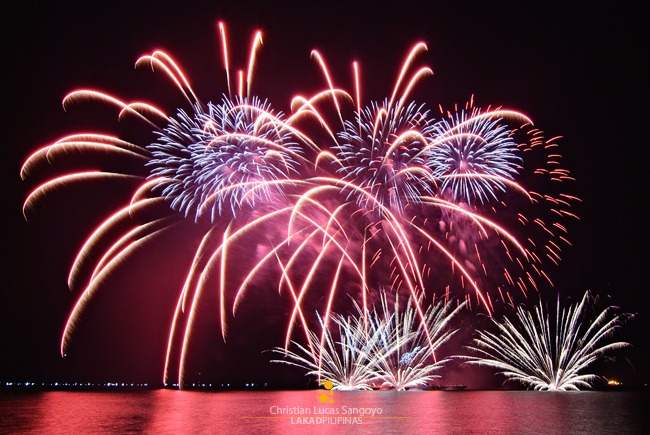
I know I should have posted this a few weeks earlier in time for the annual Pyromusical Competition at the Mall of Asia; unfortunately I was on the road too much and had started this photography series a tad too late. So, with one more week left for this year’s Philippine International Pyromusical Competition, allow me to share the ins and outs of shooting those fires in the sky.
First off, for successfully shooting a fireworks show, you need a sturdy tripod to avoid blurring your photos. A tripod would also help you shoot longer shutter speeds to capture fire trails. A camera remote is a plus, but if you have none, you can just rely on your camera’s shutterspeed setting. Okay, for non-tech camera users, I know this may be a bit complicated, but hang in there. I’ll try to explain the steps in as simple as possible manner.

Alright, since a lot of people (like more than two hehe) has been requesting me to put up a photography section on my blog, I’m finally making one and will be dishing out random bits and pieces of photography tips for the snap-happy travelers in all of us.
The first thing I will tackle is the simplest and easiest rule of shooting landscapes. I’m sure many shooters already know this but I have seen lots and lots and lots of pretty pictures ruined by simply not following this rule.
Okay, the basics says we should always keep the horizon in our photographs leveled; as in not skewed to the left or right. Why you might ask? Most pictures just look better that way; it may be because our eyes always see the horizon as leveled so we associate skewed horizons as being somewhat out of order.


