


A bronze sculpture of a saddled Spanish conquistador brandishing a pointed spear stared at us as we alighted from our bus. We’ve just evaded the usual 10-hour land trip from Manila to Ilocos Norte, thanks to SEAIR’s newest flight route to Laoag City. But still, the weather outside was a real scorcher and we wanted a roof over our head. According to the books, Fort Ilocandia is the only five-star accommodation this side of the Philippines and I’m more than glad to accept their offered hospitality.

My worn trek shoes slid through the shifting sand as I navigated a hill. The sun looked like a golden disc, silently and poetically hovering above the hardy trees of Paoay’s arid sand dunes. I kept my pace, battling the loose dunes for that spot on its hilltop where I can try and frame the desert sunset.
 I have been to this place before. More than a year ago, while circling the island of Luzon, we decided to drop by and have a peek at Paoay’s odd sand dunes. Deserts aren’t really part of the usual Philippine landscapes and everyone’s curiosity was piqued by this unnatural scenery this part of Ilocos.

Recently SEAIR (South East Asian Airlines) announced that they would be opening a new route to the north of the Philippines. The said route would ply the Manila to Laoag airways and would finally open up the Ilocos Region to an alternative travel schedule.
Together with a couple of travelers, I was invited by the airline to participate in the inaugural flight to Laoag City. I was still reeling from a hectic three-day trip to Japan the previous day, but I just couldn’t say no to this. Jetlagged, I repacked my backpack and headed towards Terminal 4 of NAIA where the SEAIR terminal is.

I really didn’t plan to go off and cross the three main islands of the Philippines. It just so happened that I got an invite for a Mindanao festival and my other travel plans for the month of June 2012 just seamlessly volted in together. In the end, I ventured from one of the northernmost province of Luzon, visited the heart of Visayas and landed on the upper lands of Mindanao. Everything-everything in sixteen awesome days without boarding a single airplane.
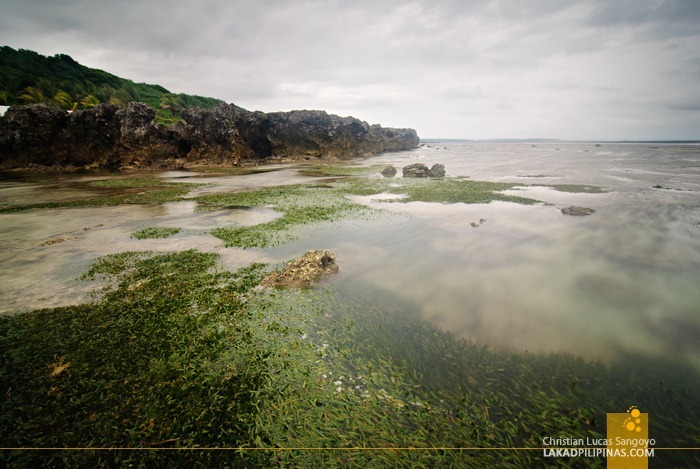
We woke up to the loud patter of rain, Vigan City was drowning. And before everything swam to the ocean, we escaped the torrential rain enveloping the city. Trying to outrun dark clouds, we headed north again, this time to the coastal town of Currimao in Ilocos Norte.


I recall a message years back from an old friend telling me about a place in Ilocos Norte that resembles something straight out of the Star Wars universe. She said it was like Tatooine, only everything’s frozen.
I’ve been to Ilocos countless times already but I can’t believe I still haven’t seen this George Lucas induced landscape yet.

It seemed our luck was about to turn though. The sky showed hints of blue as we started to descend the stone steps that lead to the shore where the nature-sculpted rock of Kapurpurawan is located.

The rain fell again. More permanently this time.
The original plan of visiting Kabigan Falls and Saud Beach were scraped off our list and the only place we were able to check out at the northern end of Ilocos Norte was the Patapat Viaduct. A brief respite from the dour weather allowed us to alight from the van and shoot a few photos.
The drive took longer than our visit and we were soon on the road again, going back to Burgos for the Farola of Cape Bojeador.


