

The beat of an oversized gendang beleq drum has died, the people, dispersed. The village of Sasak Sade, a small community of indigenous families in Lombok, seemed to revert to its normal self; children playing about its narrow dirt-packed alleys, elders going about their daily life, ladies weaving colorful tapestries, mothers nursing babies on their breasts. A child, maybe no more than twelve years of age, his face painted with a moustache, peeked shyly at me from a carved wooden door. A moment before, he was among the performers dancing with gusto and abandon, celebrating and sharing their culture to complete strangers.

Pedaling slowly, the narrow road dipped and suddenly opened on a dizzyingly wide open field. Like the Red Sea it parted, with both sides planted with newly harvested rice. I took my time, controlling my speed, studying the patches of greens amongst an otherwise golden sea of stalks. Before it ended, the road took a sudden upward stance. I braced myself and pedaled harder, accelerating towards an even narrower road paved by natural stones cocooned by a dark tree tunnel. Compress. Decompress. Compress.
 |
| NICE BREAKFAST PLACE A FEW MINUTES AWAY FROM BOROBUDUR TEMPLE |
All traces of the 2am wake-up time from the Royal Ambarrukmo Hotel were gone by the time we finished our sunrise stint at the temple of Borobudur. Gone were the yawns and the sleepy eyes; the sun has risen high enough for it to lose its golden quality and most of us have photographed the temple to death anyways. There was only one thing left to do, break the fast.
INDONESIA | Cultural Bandung; from Modern Metals to Traditional Bamboos
[BEYONDPH] Thursday, October 13, 2016
A sperm whale graciously broke free from the concrete ground—cold, dark and metallic—reaching for the ocean of leaves above; its tail, a few meters away from its head, still above ground, frozen in time as it waited its turn to dive beneath the solid floor.
After a scenic four-hour train from Jakarta to Bandung, I was pleasantly surprised to find art and culture awaiting us at Bandung, our second destination in Indonesia.
THAILAND | Benjarong Porcelain Village ~ Samut Sakhon's Hidden Gem
[BEYONDPH] Saturday, February 13, 2016
En route to the province of Nakhon Pathom, we passed a curious little village in the Samut Sakhon province. From the intricate decorations lining its street walls, I reckon we'd be visiting a ceramic-making town of sorts. I wasn't too far off with my guess.
 |
| TYPICAL SHOWROOM FOR BENJARONG PORCELAIN IN DON KAI DEE |
Ban Don Kai Dee, or the village of Don Kai Dee in Krathum Baen District produces the finest porcelain-ware in the whole of Thailand. Dubbed as the Benjarong porcelain, their wares are specifically renowned for Sakkarabenchayamani or the Five-colored Gemstones of Sakhon City. It's not that their designs are filled with gems, but for the five colors they use in painting them; black, green, yellow, red, and white. Indeed, Benjarong, literally translated, means five colors.
► SEE: CHAO PHRAYA RIVER TOUR

Our hands were lathered with bright, colorful hues. Given only ten minutes to design our umbrellas, I was still undecided on what to paint. The clock ticked away, but I’m obsessive like that; always wanting things to be perfect, always wanting to do things the right way.
The clock ticked some more.
And finally, colors popped into my head and swirls imprinted itself on my mind. I have my design, but I don’t think I have the time to finish it.
►BOOK DISCOUNTED TOURS IN CHIANG MAI
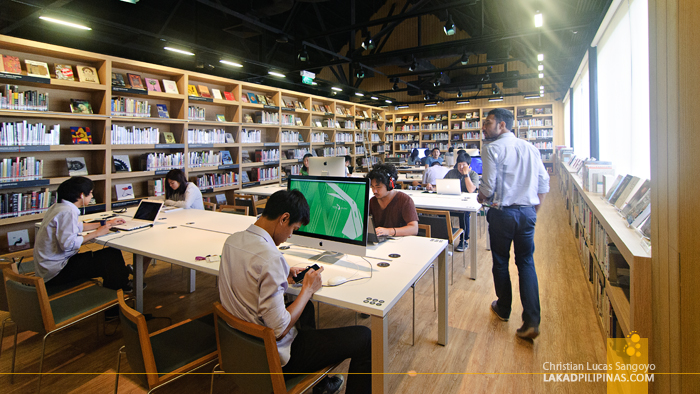
We were at the Thailand Creative & Design Centre, inspecting the first regional design center after Bangkok.
Like a spark plug, the center was put up to ignite passion for creative thinking in Chiang Mai. It was quite impressive, with modern libraries filled with nothing but books, DVDs (I saw a lot of classic anime) and all sorts of media about art.
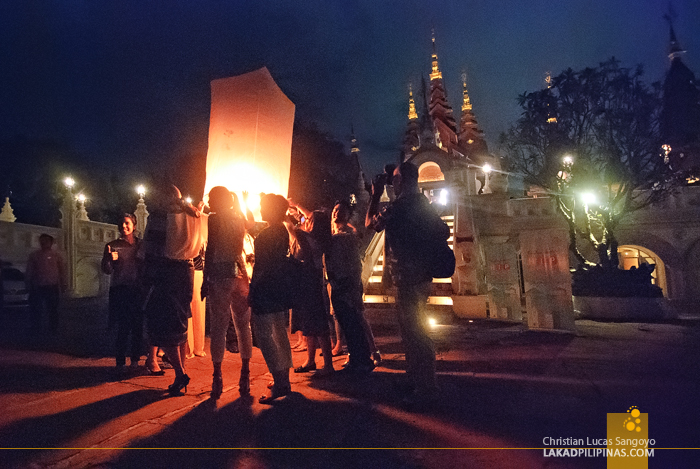
Our group held on to the last remaining lantern at the grounds of Dhara Dhevi, waiting for the air inside to heat up and make it buoyant enough to rise across the deepening night sky. Quicker than expected, I felt it pull upwards, wanting release. Silently, each one said their personal wishes and let it go.
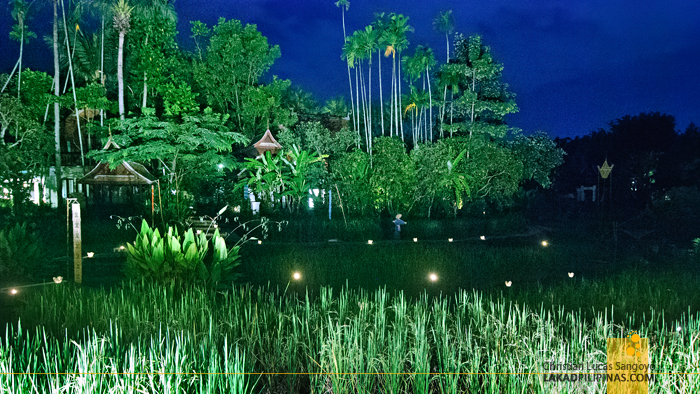
Chiang Mai was the second city we visited for TCEB’s Thailand Connect: Hip & Heritage Business Events tour. The city is second only to Bangkok when it comes to MICE tourism in Thailand.
From the Don Muang airport, we boarded a THAI Airways flight to Chiang Mai International Airport. Like our previous ride from Manila to Bangkok, it was one of the most comfortable I’ve ever had. After quickly checking in at the Siripanna Villa Resort we proceeded to Dhara Devi Hotel Chiang Mai for dinner.
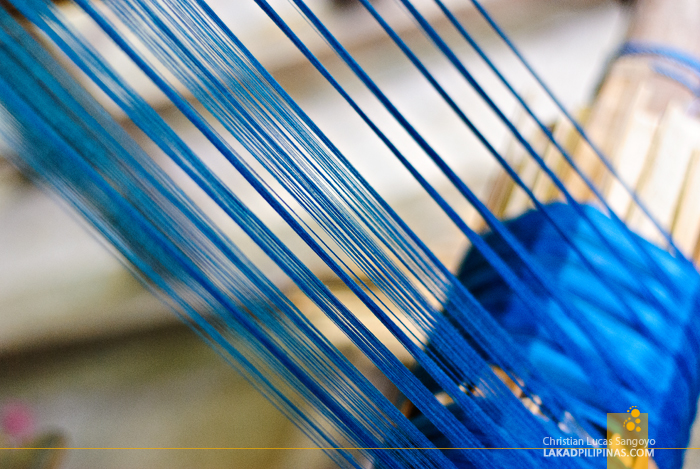
Off the southern part of Vigan City lies the town of Caoayan. Here, we witnessed how locals turn colorful strands of cloth into something beautiful. Painstakingly, they weave these by hand, turning simple yarns into something intricately beautiful—an abel, Ilocos province’s traditional woven product.
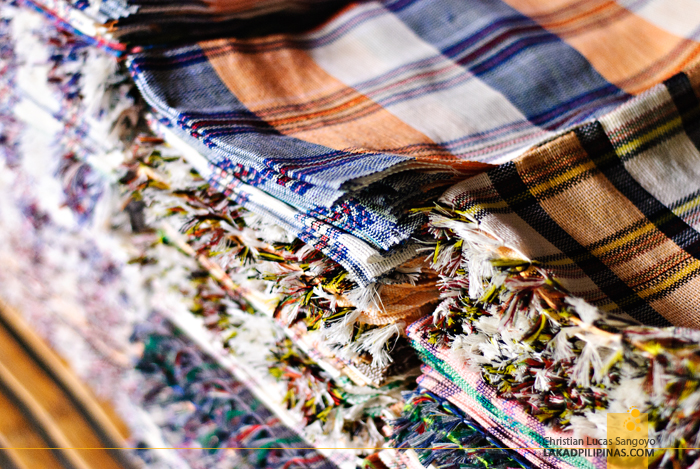
Every Ilocano worth his salt has an abel somewhere in his house; the fabric being an intrinsic part of their lives. From birth, they are wrapped in abel blanket. During their weddings, they wear dresses made from abel. Even in death, they are again wrapped in a blanket made of the same material.
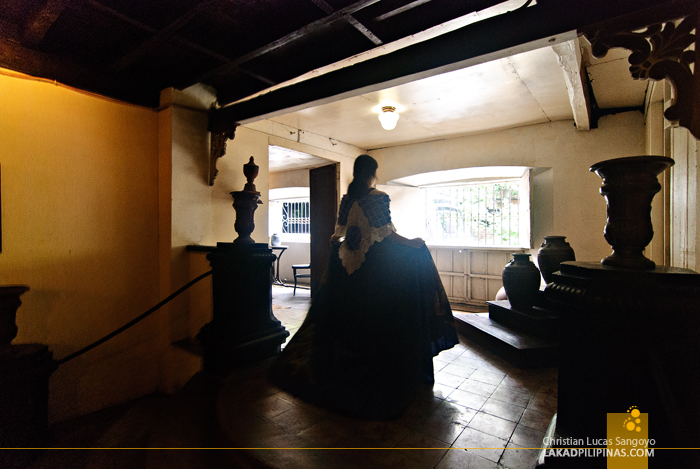
On our next stop, you get to dress as a colonial-era Bigueño. Our guide from Hotel Felicidad Vigan told us as our van sped through the rain-slicked streets of Vigan City. You want to be a smashing doña? A well-respected ilustrado perhaps? A fat prayle? A simple indio? Vigan’s Arce Mansion has every costume to fit the bill.
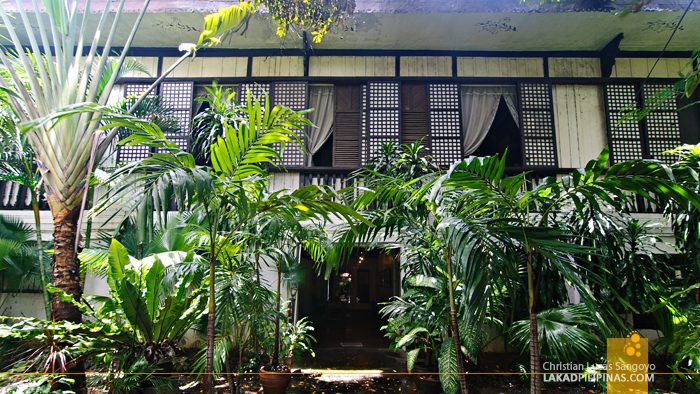
This was the first time I heard of Arce Mansion and its gimmick of letting visitors play-act as Noli Me Tangere-esque characters. It’s like cosplay, only there are no Naruto characters to pick from. This is probably the best place to take a selfie when in Vigan City.
►EXPLORE MORE: VIGAN TRAVEL GUIDE

Getting down and dirty is part of visiting Vigan City. But get your minds off the gutter, I’m talking about getting literally dirty, like molding a clay, spinning it and creating something beautiful. Well, maybe not that last part, it takes a very skilled hand to achieve that.
We were at Vigan’s Pagburnayan, the iconic pottery place in the city. Besides Calle Crisologo, this place probably clocks in as the most photographed Instagrammed spot in the city.
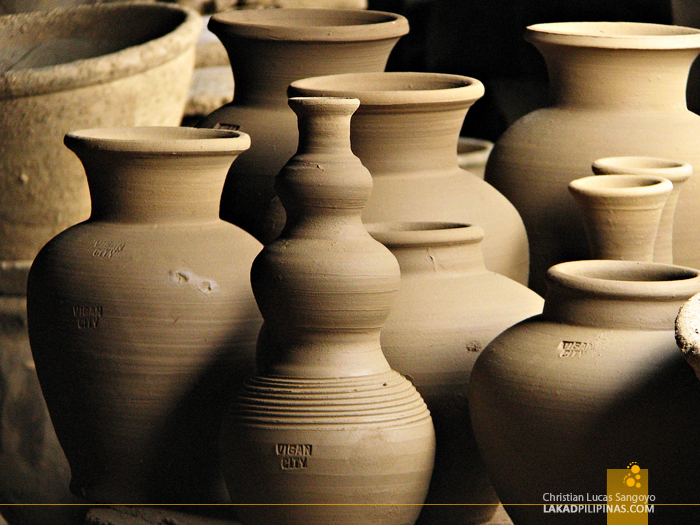
Its name, Pagburnayan, comes from the root word burnay. It refers to the hand-crafted earthenware pots made from Vigan. Bantog clays, these are called. They’re dug from the western barangays of the city.
I once asked a cuchero who was touring me around where they would get more of these, if supplies ran out. Impossible, he says, they’ve been sourcing their materials from that area since Chinese immigrants came to Vigan City and established the craft.
►EXPLORE FURTHER: VIGAN TRAVEL GUIDE

The first thing that comes to one’s mind when one mentions pottery-making is Vigan City. But unbeknownst to most people, a small town in Antique also has the same industry. On our second day of touring the province, we not only got to visit their place but we also got to try our hands on molding clay pots.
►MORE: ANTIQUE TRAVEL GUIDE
 |
| KIDS FROM UP VISAYAS |
The day started early. From the Zipline Inn, the group drove down to Barangay Malabor for a leisurely breakfast at its pebbly shore, the same spot where we experienced Lambaklad Fishing the day before. We then headed to Barangay Bandoja right after, it was time to get our hands dirty.
 |
| CLAY POTTERY IN TIBIAO |
Tons of orange bricks greeted us as we alighted from our van. The place is about a fourth in size compared to Vigan City’s pottery shops, but it’s no less compelling. Together with students from the University of the Philippines Visayas, we all swarmed through the complex, taking snaps and basically just gawking at this seemingly archaic way of building stuff.
►SEE: VIGAN TRAVEL GUIDE
 |
| BRICKS AND POTTERY |
Bricks are generally not used as building materials here in the Philippines, the hollow block, being the preferred choice. It’s probably due to the lack of clay material to use, which is unfortunate since bricks are really beautiful.
You can’t say that for the town of Tibiao though as they have about half a million metric tons of clay reserve. I just wish they’d start using bricks more as building materials. Just imagine a whole village made of brick houses in this town and the tourism it would bring.

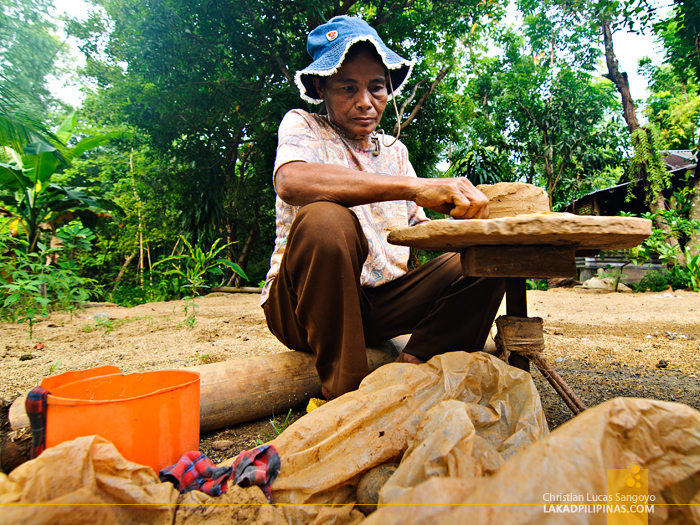 |
| A LADY POTTER AT BARANGAY BANDOJA |
After everyone settled down, the lady potters of Barangay Bandoja started to do their magic. Molding, spinning, trimming—transforming a block of unwieldy earth into something useful and beautiful.
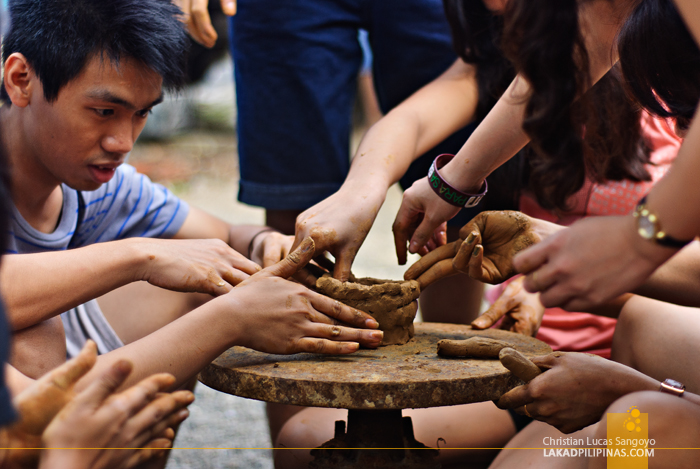 |
| POTTERY-MAKING CONTEST! |
To make things more interesting, the guys from Katahum Tours conducted a building contest of sorts with the college kids. Grouped into four and guided by one potter, they’re asked to build a pot of any kind. The more unique the better.
We also tried to get into the spirit of things, getting our hands dirty and all. But building a clay pot is not an easy job. Clay is an unwieldy element. But that didn’t stop us from having fun and making our own design, deformed as it may be.
 Tibiao Pottery and Bricks
Address: Barangay Bandoja, Tibiao, Antique
Contact Number:
Opening Hours:
GPS Coordinates:

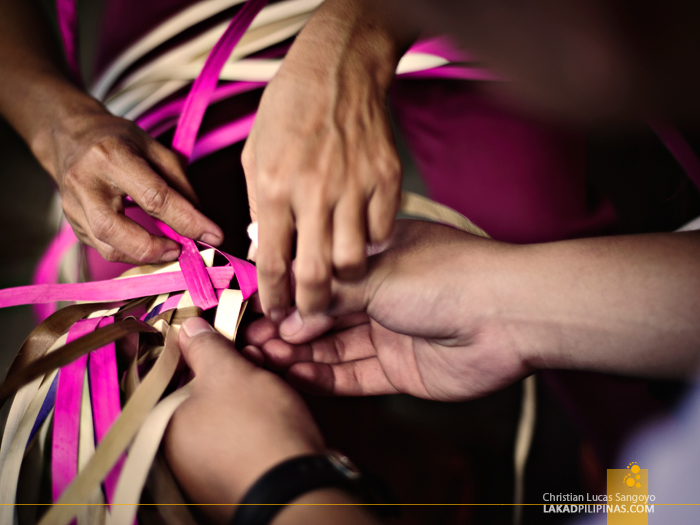
The women of Antique have busy hands. These tanned and lined hands hold both straws and twines for hours on end, threading and weaving something simple into handicrafts and fabrics of grand designs. We were lucky enough to witness how these women weave their magic on the first few hours of our trip in the province.
►CHECK: ANTIQUE TRAVEL GUIDE
 |
| A BURI WEAVER IN TOBIAS FORNIER |
Tobias Fornier was the first town we visited. Together with the a busload of students from the University of the Philippines in Visayas, we watched as the members of Buri Handicraft Association, Inc. of Antique braid buri palm into baskets, bags, mats, wallets, and boxes.

On a solo backpacking trip I had years ago, I was asked by a group of travelers to join them on a journey to Banaue from Sagada; they said they’d be staying in traditional Ifugao huts complete with swimming pools. I had to decline then, having itineraries of my own and thought they were joking until I saw the same village they’re describing with my very own eyes some years after.

The second destination for PHILTOA’s Ifugao Heritage Warrior Caravan Run was in Apa Nga-O Viewpoint where the Banaue Ethnic Village and Pine Forest is located. The village is about six kilometers away from Poblacion and can be accessed by renting a tricycle or habal-habal from the town.


