
ILOILO | San Jose Church
Sunday, December 19, 2010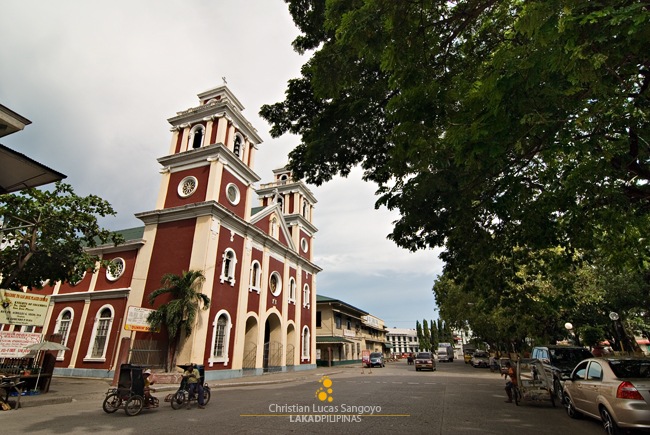
The first ever Catholic Church built in Iloilo and the birthplace of the feverish Dinagyang Festival, San Jose Church was my second stop in Iloilo City.
 Having no definite plan upon arriving downtown, I went haphazardly through Iloilo’s busy streets with just my iPhone map as guide.
I checked out the nearest plaza and churches tagged on my phone and just asked the local on how to get there. San Jose Church was really not on my on-the-fly itinerary, it just happened that when I visited Plaza Libertad, I saw its cream and maroon towers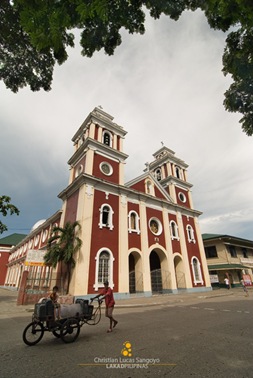 looming up from behind the park’s treeline.
It turned out that the church was far more interesting than the plaza, which was really my intended destination.
The modular-looking San Jose Church was built in 1617 by the Augustinian Order. Its symmetrical façade features two bell towers punched with a regular rhythm of arched and round windows. Its Byzantine-Neoclassic design was based on Spain’s Church of Valencia del Cid.
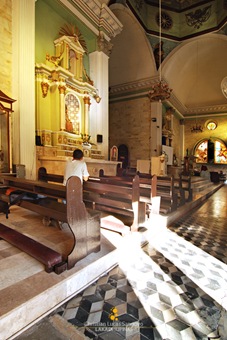
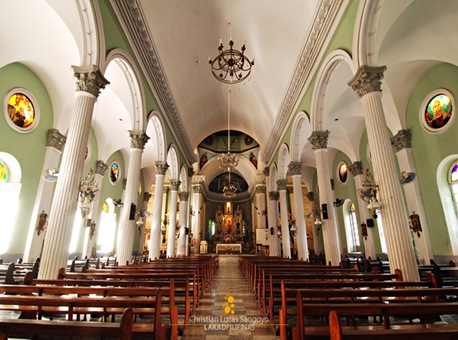
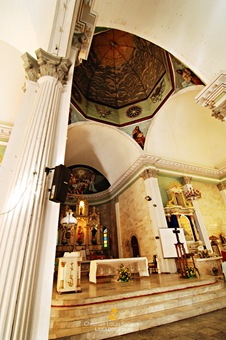
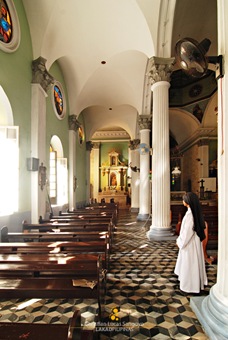
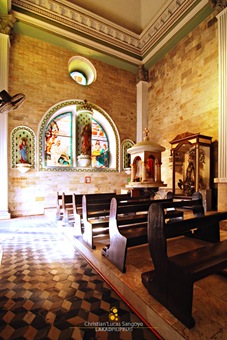
The interior was very ornate compared to the Jaro Cathedral, which I had just visited. The walls, which were punctuated with circular stained glass clerestory windows, were painted light green with white highlights.
Towering white Corinthian columns support the faux barrel ceiling and a combination of gray, white and black marble made up the floor. This was quite interesting, as it forms some sort or 3D optical illusion; not your typical church tiles here.
The image of the Nuestra Señora del Rosario, which is the center of the much hyped Dinagyang Festival, is housed along with a dozen more religious treasures within San Jose Church.
The gates were closed during my visit, but I was still able to get inside San Jose Church the next day when I was told that visitors could enter through its side doors.











2 comments
They do house the replica of Santo Niño de Cebú here during Dinagyang. Upon Sinulog time, it is the opening salvo and the arrival of the image from Cebu.
ReplyDeleteIntetesting info Berniemack :)
Delete